
3.5 CE course
Certificates are emailed immediately upon completion of course evaluation.

Intended Audience
This is a recorded 3.5-hour intermediate-to-advanced level IFS course for IFS-trained and IFS-informed therapists who have experience practicing IFS with many clients. EMDR therapists who are IFS-trained or IFS-informed and learning to integrate the models will also benefit from learning the intricacies and nuances of working with blended parts as taught in this workshop.
Course Description
In 15+ years of IFS practice, teaching & consulting...
Bruce has arrived at the understanding that people are nearly always blended with parts. When therapists say, “I’m not able to do IFS with this client,” what they really mean is, “I’m not able to do InSight with this client.” InSight, or internal communication, is a special circumstance requiring sustained Self-presence even when parts are activated. Even Explicit Direct Access requires a modicum of Self-presence because, to do it, the client must understand and agree that they are blended with a part. There are many times when clients have insufficient access to Self to engage in InSight or Explicit Direct Access and are blended with parts that don’t know they are parts. More often than not, in my experience, this is the case. It can be for short periods of time during specific sessions, or for long stretches of many sessions.
How are we to do IFS then? Bruce has spent many years refining his approach to IFS to be Self-led and effective under these very common conditions. Direct Access is better understood as a condition, rather than something you do. It is any time the therapist is communicating directly with a client’s blended part. Since people are blended more often than not, it is incumbent upon therapists to presume this ‘condition’ until there is proof to the contrary (Self-presence). Thus, Implicit Direct Access is the ideal default approach to IFS, because, realistically, the vast majority of time in IFS therapy will be spent in Implicit Direct Access. Becoming knowledgeable and skilled in Direct Access, especially Implicit Direct Access, is the most practical way to become proficient in clinical application of the IFS model. It is the heavy lifting required to prepare the foundation for InSight, which can then proceed more easily and fluidly.
In this workshop Bruce shares these various perspectives and tools to help you master Implicit Direct Access so that you can feel confident working with your client’s blended parts:
· Informed Curiosity – getting the most out of the 6 F’s
· The Unblend Agenda – It’s Befriending, not Unblending
· Protector Positive Intentions – A solution and a problem
· Blended for Life – “This is who I am.”
· Polarization – Winner/Loser, No-brainer
· Flipping the Part – Parts have Selves
You will learn that Direct Access is not just ‘regular talk therapy’ until you can do IFS, nor is it a less productive alternative to InSight. You may even realize that leaning into Direct Access can sometimes, paradoxically, be more powerful than any other IFS method you know.
It consists of 2 hours of PowerPoint slide presentation with plenty of discussion with the live audience, two video demonstrations (role-plays with therapists-in-consultation playing their client blended with a part) and discussion of the video demonstrations. There is also a spontaneous live demonstration with a workshop participant who is blended with a part and discussing a case that activates this therapist part. During this piece, Bruce effectively demonstrates the approach he is teaching.
During the workshop, Bruce shares numerous insights, innovative concepts and techniques beyond what can be listed in this brief course description. Like many of his workshops, after taking it you will want to review it to fully capture its fullness and many nuances. One participant during the workshop stated it this way in the zoom chat to the host, “Where did you find this guy? He’s fantastic!”
Learning Objectives
After completing this workshop, participants will be able to:
- Define Implicit Direct Access.
- Discuss the concepts of Winner v. Loser & No-Brainer in the context of Polarizations.
- Identify the Problem and Solution aspects of a blended part's Fears and Positive Intentions.
- Discuss the notion of Self within Parts and its relevance to ‘Flipping’ a blended part.
References
Bibliography (References):
Ally, D., Tobiasz-Veltz, L., Tu, K., Comeau, A., Bumpus, C., Blot, T., Rice, F. K., Orr, B., Soumerai Rea, H., Sweezy, M., & Schuman-Olivier, Z. (2025). A pilot study of an online group-based Internal Family Systems intervention for comorbid posttraumatic stress disorder and substance use. Frontiers in Psychiatry, Volume 16-2025.
Anderson, F.G. (2021). Transcending trauma: Healing Complex PTSD With Internal Family Systems. Claire, WI: PESI Publishing.
Comeau, A., Smith, L. J., Smith, L., Soumerai Rea, H., Ward, M. C., Creedon, T. B., Sweezy, M., Rosenberg, L. G., & Schuman-Olivier, Z. (2024). Online group-based internal family systems treatment for posttraumatic stress disorder: Feasibility and acceptability of the program for alleviating and resolving trauma and stress. Psychological Trauma: Theory, Research, Practice, and Policy, 16(Suppl 3), S636–S640.
Ecker, B. (2024). A proposal for the unification of psychotherapeutic action understood as memory modification processes. Journal of Psychotherapy Integration, 34(3), 291–314.
Ecker, B., Ticic, R., & Hulley, L. (2024). Unlocking the Emotional Brain: Memory Reconsolidation and the Psychotherapy of Transformational Change (2nd ed.). Routledge.
Ecker, B., Bridges, S.K. (2020) How the Science of Memory Reconsolidation Advances the Effectiveness and Unification of Psychotherapy. Clin Soc Work J 48, 287–300. https://doi.org/10.1007/s10615-020-00754-z
Every-Palmer, S., et al. (2024). EMDR vs. usual treatment for PTSD in adults with psychosis: A randomized controlled trial. Psychological Trauma: Theory, Research, Practice, and Policy, 16(Suppl 3), S555–S560.
Fatter, D. (2026). Integrating internal family systems (IFS) into EMDR therapy: The step-by-step guide to complex trauma recovery. PESI Publishing, Inc.
Gomez, A. M. & Krause, P. K. (2013). EMDR Therapy and the Use of Internal Family Systems Strategies With Children, In A. M. Gomez, (Ed.), EMDR Therapy and Adjunct Approaches with Children (pp. 299–345). New York, NY: Springer publishing.
Hafkemeijer, L., Hofman, S., de Jongh, A., de Roos, D., van Velzen, M., Starrenburg, A., & Slotema, K. (2025). The effectiveness of eye movement desensitization and reprocessing therapy on post-traumatic stress disorder symptoms and diagnostic status in patients with a personality disorder: A randomized controlled trial. *Psychotherapy and Psychosomatics, 94*(6), 453–??.
Hart, K. (2025). Treating trauma with EMDR and IFS: A clinician's guide to integrating eye movement desensitization and reprocessing therapy with internal family systems. New Harbinger Publications.
Hersey, B. (2025) Syzygy: Alignment of IFS, EMDR and Memory Reconsolidation. In Polidi, D. (Ed.), IFS-Informed EMDR: Creative and Collaborative Approaches (1st ed.), (pp.. 63-77). Routledge.
Hodgdon, H. B.; Anderson, F. G.; Southwell, E.; Hrubec, W.; Schwartz, R. C. (2022) Internal Family Systems (IFS) Therapy for Posttraumatic Stress Disorder (PTSD) among Survivors of Multiple Childhood Trauma: A Pilot Effectiveness Study. Journal of Aggression, Maltreatment & Trauma. Jan2022, Vol. 31 Issue 1, p22-43. 22p. 1 Diagram, 1 Chart, 1 Graph. DOI: 10.1080/10926771.2021.2013375.
Knipe, J. (2019). EMDR Toolbox, Second Edition: Theory and Treatment of Complex PTSD and Dissociation. Springer Publishing Company.
Kredler, V. (2023) How does Internal Family Systems therapy lead to transformational change through memory reconsolidation? Counselling Australia, Autumn Volume 24 (2) (26-36).
Lawrence, M. (1998) EMDR as a special form of ego state psychotherapy: Part 1. EMDRIA Newsletter, 3:4.
Lawrence, M. (1999) EMDR as a special form of ego state psychotherapy: Part 2. EMDRIA Newsletter, 4:1.
Neff, K. D. (2003). The development and validation of a scale to measure self-compassion. Self and Identity, 2(3), 223–250. https://doi.org/10.1080/15298860309027
O’Shea Brown, G. (2021) Internal Family Systems Informed Eye Movement Desensitization and Reprocessing: An Integrative Technique for Treatment of Complex Posttraumatic Stress Disorders. International Body Psychotherapy Journal The Art and Science of Somatic Praxis. Volume 19, Number 2, Fall/Winter 2020/2021, pp. 112-122
Poli, A., Gemignani, A., & Miccoli, M. (2022). Randomized Trial on the Effects of a Group EMDR Intervention on Narrative Complexity and Specificity of Autobiographical Memories: A Path Analytic and Supervised Machine-Learning Study. International journal of environmental research and public health, 19(13), 7684. https://doi.org/10.3390/ijerph19137684
Richardson, M. (2025) Phase 2.5 Discovery: Working with Blended Protectors. In Polidi, D. (Ed.), IFS-Informed EMDR: Creative and Collaborative Approaches (1st ed.), (pp.. 78-92). Routledge.
Schwartz, R. C. (2021). No bad parts: Healing trauma and restoring wholeness with the Internal Family Systems model.Sounds True.
Schwartz, R.C. & Sweezy, M. (2021). Internal Family Systems Therapy (2nd ed.). New York NY: Guilford Press.
Shapiro, F. (2018). Eye movement desensitization and reprocessing. Basic principles, protocols and procedures (3rd ed.) New York, NY: Guilford Press.
Tsai, C. S., & Chang, H. J. (2024). EMDR efficacy for depression: A meta-analysis and meta-regression. Journal of Clinical Medicine, 13(18), 5633.
Twombly, J. H., & Schwartz, R. C. (2008). The integration of internal family systems model and EMDR. In C. Forgash & M. Copeley (Eds.), Healing the heart of trauma and dissociation with EMDR and ego state therapy (pp. 295–311). New York, NY: Springer publishing.
Your Instructor
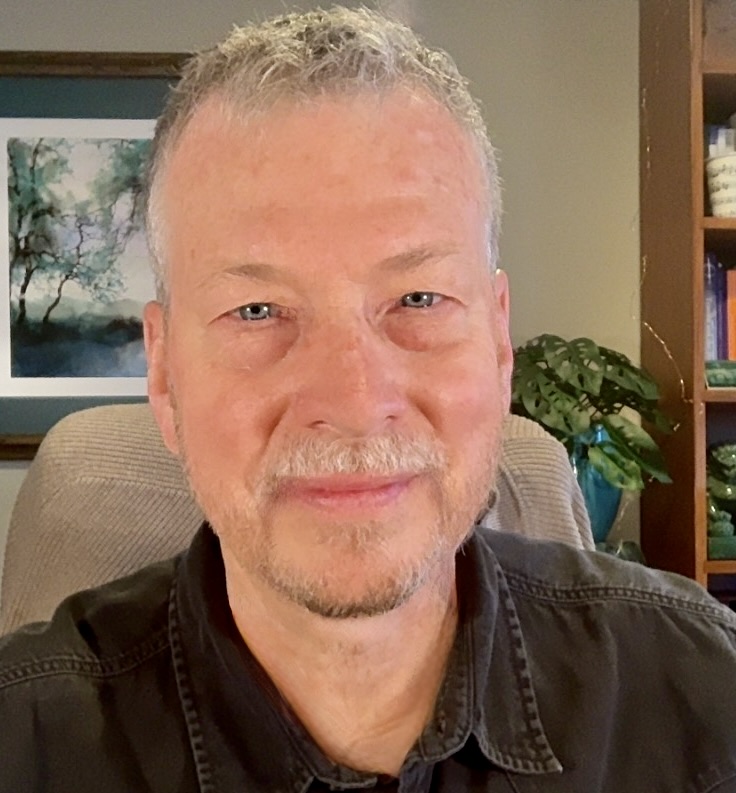
Bruce Hersey, LCSW, is an Approved Consultant in EMDR and also a Certified IFS Therapist & Consultant.
Having completed IFS Levels I, II & III Training, and as a repeat Level One Program Assistant, he has passionately imparted his deep understanding of the model by teaching numerous introductory IFS workshops, leading IFS consultation groups, and providing individual IFS consultation.
He has presented at the IFS International Conference several times, and has been teaching workshops on the integration of EMDR & IFS since 2013.
Additionally, Bruce has extensive experience in Clinical Hypnosis & Sex Therapy.
Continuing Education Information
- This program (#17025-DL41) is approved for 3.5 EMDRIA credits for participants who have completed an EMDRIA- Approved Basic EMDR Training. emdrifs.com LLC is an approved EMDRIA Credit (EC) Provider (#17025).
- Approved for 3.5 IFS recertification CE by IFS-Institute.
- emdrifs.com LLC is recognized by the New York State Education Department's State Board for Social Work as an approved provider of continuing education for licensed social workers #SW-0740.
- emdrifs.com LLC is recognized by the New York State Education Department's State Board for Mental Health Practitioners as an approved provider of continuing education for licensed marriage and family therapists #MFT-0116.
- emdrifs.com LLC is recognized by the New York State Education Department's State Board for Mental Health Practitioners as an approved provider of continuing education for licensed mental health counselors #MHC-0278.
- emdrifs.com LLC is recognized by the New York State Education Department's State Board for Psychology as an approved provider of continuing education for licensed psychologists #PSY-0230. Approved for 3.5 Psychology CE Contact Hours.
- emdrifs.com, LLC has been approved by NBCC as an Approved Continuing Education Provider, ACEP No. 7432. Programs that do not qualify for NBCC credit are clearly identified. emdrifs.com, LLC is solely responsible for all aspects of the programs.
- emdrifs.com, LLC, #249 is approved as an ACE provider to offer social work continuing education by the Association of Social Work Boards (ASWB) Approved Continuing Education (ACE) program. Regulatory boards are the final authority on courses accepted for continuing education credit. ACE provider approval period: 10/6/2026 -10/6/2027. Social workers completing this course receive 3.0 clinical continuing education credits.